

A bonus is generally taxable compensation
A bonus does not necessarily have a separate final tax rate. The amount withheld depends on payroll rules and can differ from the amount owed when a return is filed.
The separate flat-rate method
When eligible, ordinary federal supplemental withholding is 22% up to the annual supplemental wage threshold. California’s separate flat bonus withholding is 10.23%. Payroll contributions may also apply.
The aggregate method
An employer may instead combine supplemental and ordinary wages in the applicable payroll calculation. A large one-time payment can therefore have a different withholding amount than a flat-rate estimate.
Use prior wage information
For a separate bonus estimate, enter prior taxable and supplemental wages from the employer. The Social Security wage cap and Additional Medicare threshold matter more for higher earners.
A worked example of a separately paid bonus
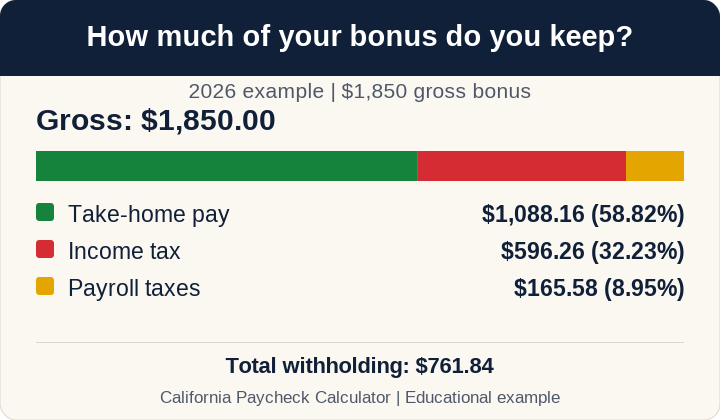
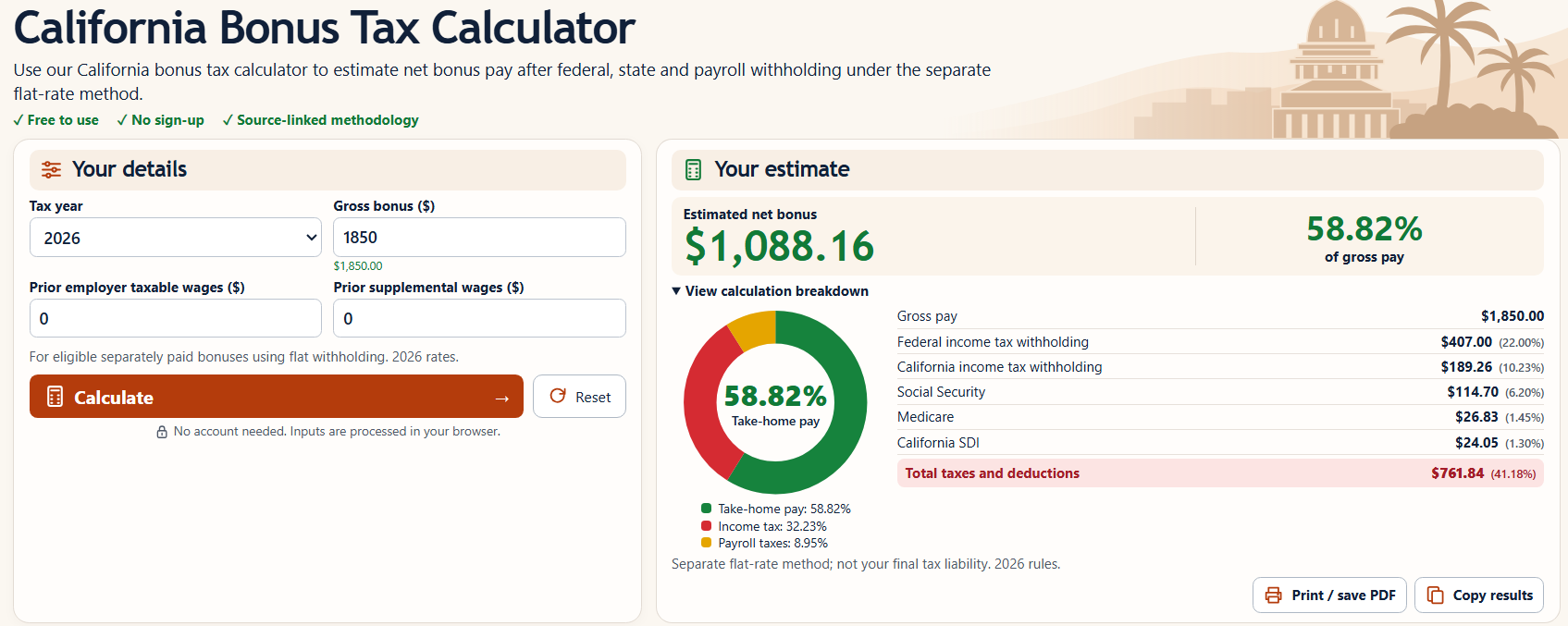
Consider a $1,850 bonus paid in 2026 using the eligible separate flat-rate method with zero prior employer taxable and supplemental wages and all bonus wages covered. Federal withholding is $407.00, California bonus withholding is $189.26, Social Security is $114.70, Medicare is $26.83 and SDI is $24.05. Total withholding is $761.84 and estimated net payment is $1,088.16 before any other deductions. This is not a universal bonus tax rate.
Why the wage base changes the result
If the employee has already reached the Social Security wage maximum with that employer, some or all of the bonus may not be subject to employee Social Security withholding. Medicare has no ordinary wage maximum and Additional Medicare withholding can apply above the employer threshold. A large bonus that crosses a supplemental wage threshold can also have different federal withholding. Enter previous wages, not annual salary, when comparing a specific check.
How to compare the actual bonus deposit
Start with the bonus gross amount and identify whether the bonus was paid separately or combined with regular wages. Compare the employer’s federal and California methods and ask whether retirement contributions or other benefits apply to bonuses. The calculator assumes separate flat withholding and does not model aggregate withholding with your regular check.
Do not treat the withholding rate as final tax
A bonus is generally part of annual taxable compensation. The return reconciles amounts withheld with actual tax liability. A larger withholding percentage on a bonus does not necessarily mean the bonus is permanently taxed at that percentage. Keep the bonus pay statement for your records and consult the official withholding resources for other methods.
Illustrative $1,850 bonus calculation
| Deduction | Amount |
|---|---|
| Federal | $407.00 |
| California | $189.26 |
| Social Security | $114.70 |
| Medicare | $26.83 |
| SDI | $24.05 |
| Total withholding | $761.84 |
| Estimated net | $1,088.16 |
Related calculator example
Actual calculator screens using hypothetical inputs. These examples are illustrative estimates, not personal financial advice.
2026 separate flat-rate bonus example
Frequently asked questions
Are all bonuses subject to the same California withholding percentage?
No. The payment category, employer method and applicable wage rules matter. This calculator is for qualifying separately paid bonuses.
Can the result be different if I earn a high salary?
Yes. Year-to-date wages and supplemental wages can change the taxes withheld.
Calculate your own estimate
Try the California Bonus Tax Calculator using your own figures.
Official sources and methodology
Rules reviewed 2026-11-25. Consult the source agencies for the latest guidance and individual exceptions.
Educational content, not individual tax or legal advice. Source review: 2026-11-25.